Quality Assurance
Quality You Can Verify, Not Just Claim
Quality assurance at YSCMED is built on evidence that partners can check: reliability tests carried out to defined methods, quantified human factors data behind the handle, height and viewing angle, and a clear comparison of cable management and fixation solutions. This page sets out that evidence honestly, without blanket claims.
Reliability Test Evidence
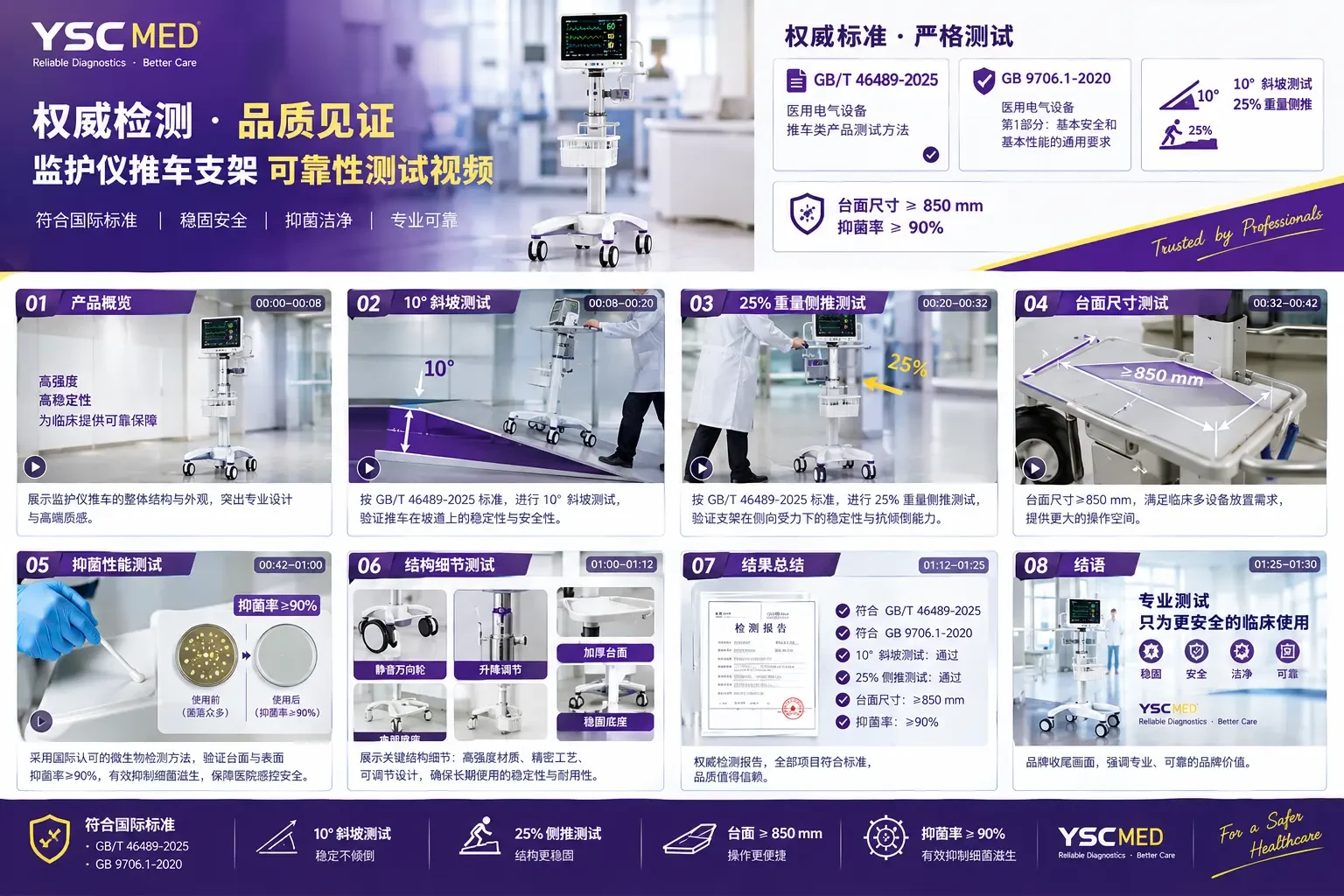
The reliability test program for the monitor cart platform follows defined test methods and is documented step by step, from product overview through slope, side-push, tabletop, surface hygiene and structural checks to a formal result summary.
 YSC TECH
 YSC TECH
Stability Under Real Conditions
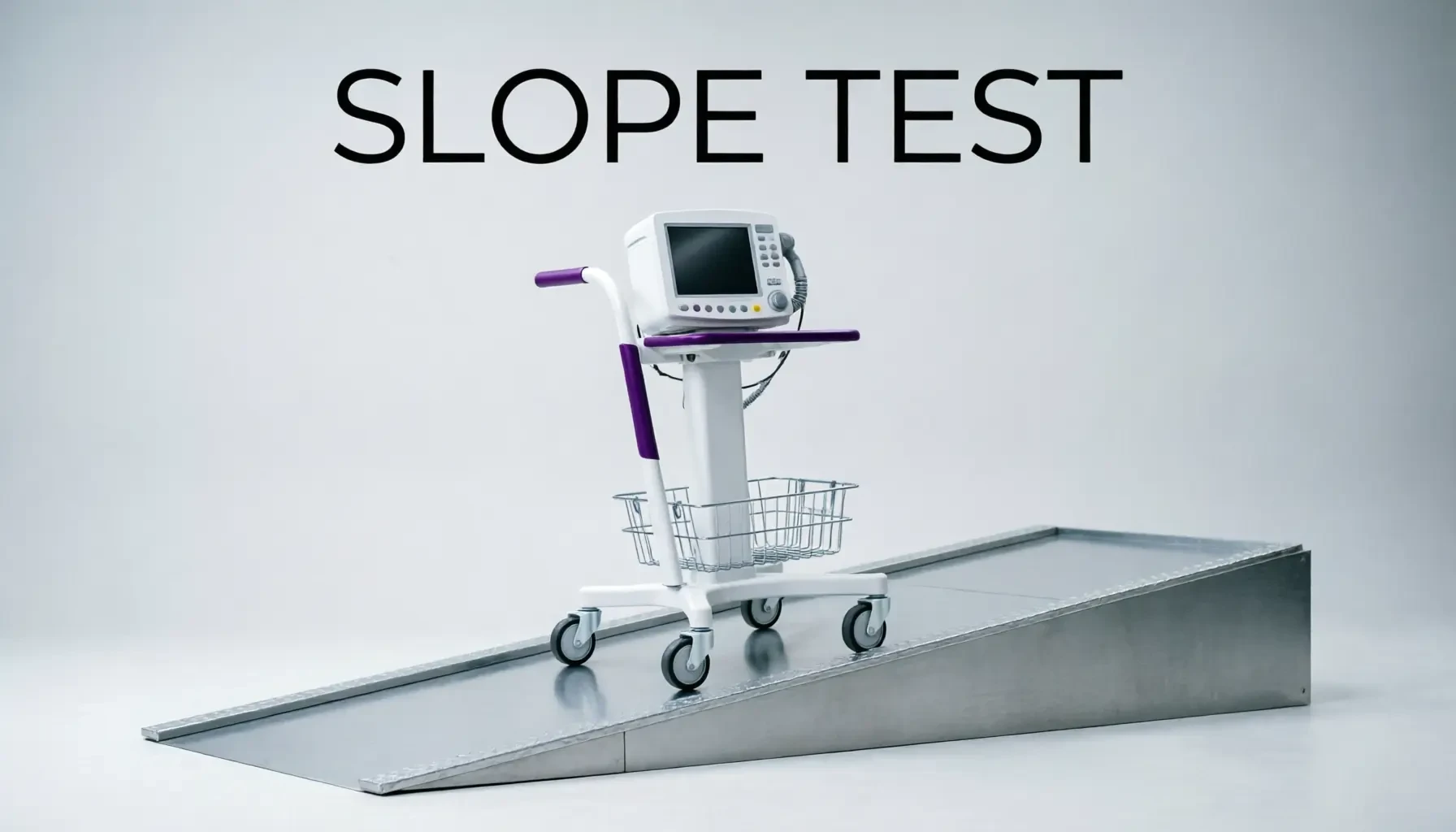
The 10° slope test and the 25% side-push test check the cart exactly where it is most at risk — on uneven floors and under sideways force. With the monitor mounted, the cart stays stable and safe, so it can be moved and repositioned without tipping.
- ✓10° slope stability, carried out to GB/T 46489—2025
- ✓25% weight side-push, carried out to GB/T 46489—2025
- ✓Tabletop ≥ 850 mm for a larger working area
Product Overview
Overall structure and appearance of the monitor cart — high strength, high stability and a professional finish for dependable clinical use.
10° Slope Test
Stability and safety of the cart on a 10° slope, carried out to GB/T 46489—2025.
25% Side-Push Test
Stability and anti-tip behaviour under a lateral push equal to 25% of the loaded weight, carried out to GB/T 46489—2025.
Tabletop Size Test
Tabletop of ≥ 850 mm verified, providing a larger working area for several devices and easier handling.
Surface Hygiene Test
Surface and tabletop evaluated with a recognized microbiological method; an antibacterial rate of ≥ 90% is recorded in the test report.
Structural Detail Test
Silent casters, height adjustment, thickened tabletop and reinforced base reviewed for long-term stability and durability.
Result Summary
All test items passed. The formal test report can be shared with qualified partners on request.
Conclusion
Tested for safer clinical use — stable, safe, clean and reliable.
GB/T 46489—2025
Test methods for cart-type products
Applied to the 10° slope test and the 25% weight side-push test of the monitor cart platform.
GB 9706.1—2020
Medical electrical equipment — Part 1: General requirements for basic safety and essential performance
Referenced for the basic safety and essential performance requirements relevant to the cart platform.
Human Factors & Biomechanics
Quantified Evidence: Handle, Height & Viewing Angle
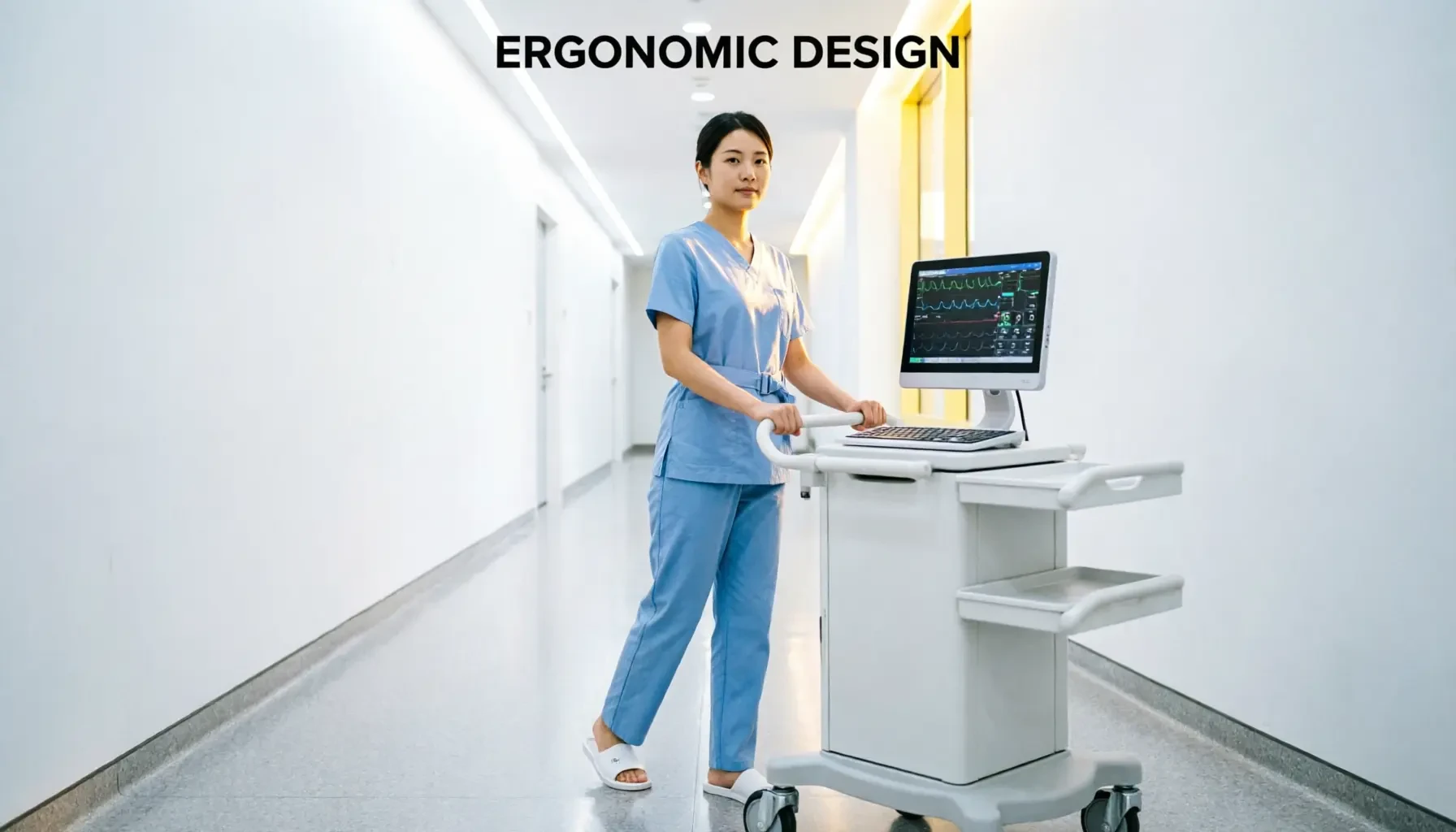
Ergonomics on a medical cart is measurable. The values below are the design reference ranges we work to for the handle, work surface, monitor height and viewing geometry, so the cart supports comfortable handling and reading throughout a shift.
 YSC TECH
Handle Design
- Handle height
- 900 – 1,000 mm above floor
- Grip cross-section
- Ø 28 – 32 mm, full-hand grip
- Handle position
- Centred on the push side, clear of the load
Handle height and grip size are set to a comfortable range for standing users, so pushing the cart does not require a hunched or twisted posture. A centred handle keeps the push force aligned with the direction of travel and away from the mounted equipment.
Working & Monitor Height
- Work surface height
- ≥ 850 mm
- Monitor centre height
- 1,150 – 1,400 mm above floor
- Height adjustment
- Column range, model dependent
The work surface and the monitor centre are positioned in the comfortable reach and sight band of standing clinical staff, so devices are handled and read without excessive bending, reaching or stretching.
Viewing Angle & Distance
- Screen tilt
- 0 – 15° downward
- Eye-to-screen distance
- ≥ 500 mm
- Sight line
- Within ± 15° of horizontal
A downward tilt of the screen and a minimum viewing distance help keep the sight line close to horizontal, reducing neck strain during long monitoring sessions and giving a clear view from both sitting and standing positions.
Values shown are design reference ranges for the cart platform. Handle geometry, height adjustment range and tilt are model dependent — please confirm the exact figures against the technical file of the specific product.
Clinical Intervention
Comparative Data: Cable Management & Fixation Devices
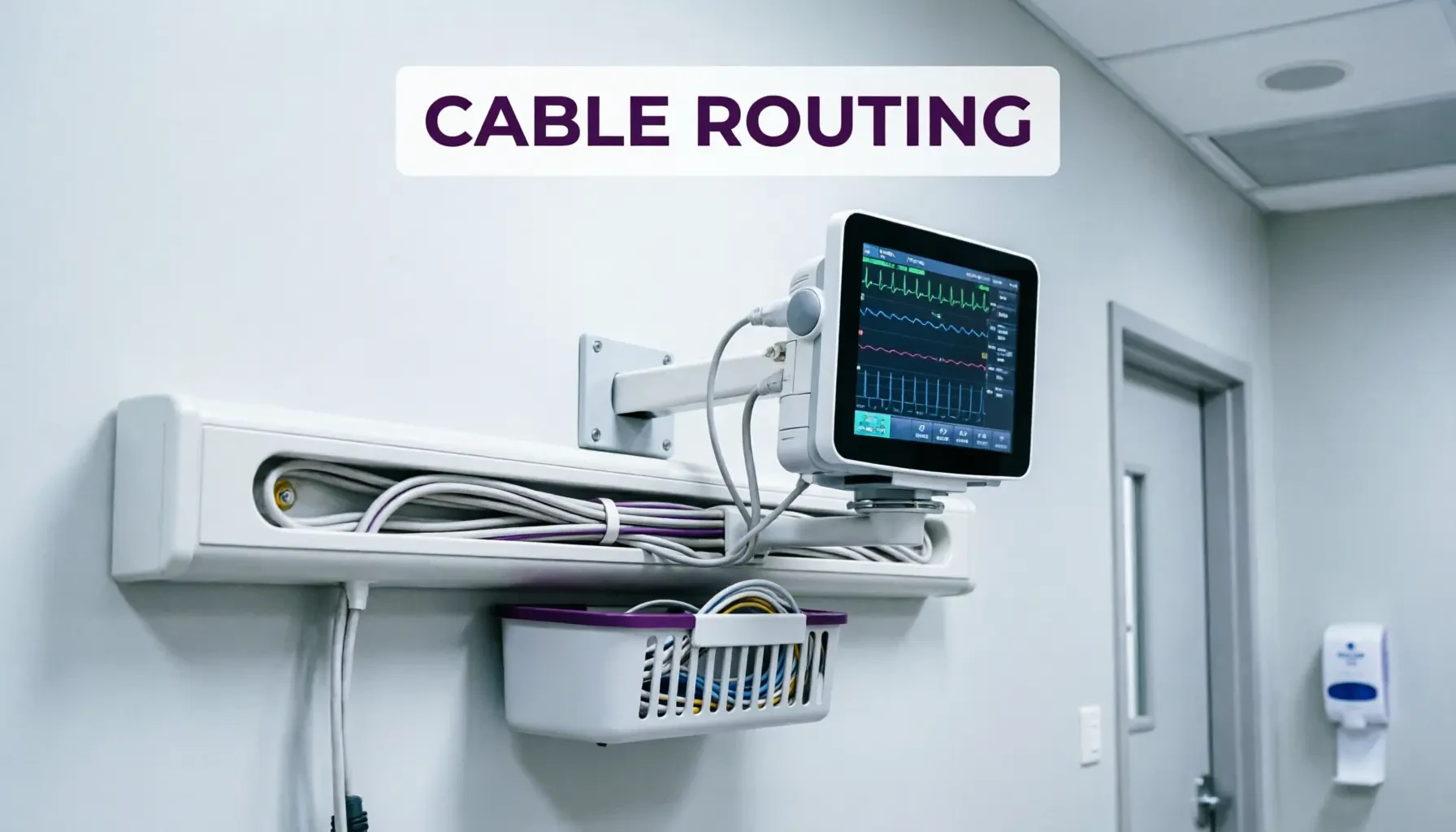
How a monitor is routed and fixed changes what staff deal with every day. The table below compares a conventional setup with our integrated cable management and dedicated fixation design, and the difference it makes in use.
 YSC TECH
| Aspect | Conventional setup | YSC design | Observed difference |
|---|---|---|---|
| Cable routing | Cables left loose on the cart and floor | Integrated wire basket and cable channels | Fewer snagging and trip points, a tidier workspace and faster surface cleaning between patients. |
| Device fixation | Monitor placed loosely on the tabletop | Fixed mounting bracket or mounting plate | Lower risk of sliding and tip-over, and reduced vibration of the device during transport. |
| Repeated handling | Devices lifted on and off for each use | Dedicated mount with defined height and tilt | More consistent screen position between users and fewer adjustments during a shift. |
| Cleaning access | Cable bundles routed around equipment | Routed channels and reachable surfaces | Easier access to surfaces for routine cleaning and disinfection workflows. |
How to Read This Evidence
Test results refer to the specific models and test methods described. The comparison above describes design intent and field observations from typical deployments — it is not the result of a controlled clinical trial. Human factors values are design reference ranges.
We do not state that our products "comply with all medical regulations", we do not label surfaces as "antibacterial", and we do not promise to "eliminate healthcare-associated infections". Where test reports or certificates exist for a specific model, they can be shared with qualified partners on request. Cleaning and disinfection should always follow the product instructions and the methods validated by the healthcare facility.
Request Test Reports & Technical Files
Reliability test reports, ergonomic design data and model-specific technical files are available for qualified distributors and hospital procurement teams. Tell us the model and what your tender requires, and we will prepare the documentation package.